
Fairplay Guide
Fairplay Andar Bahar: Rules, Dealing Order & Variations
Read Fairplay Andar Bahar: Rules, Dealing Order & Variations, with clear explanations of the format, variations and the meaning of its rules.
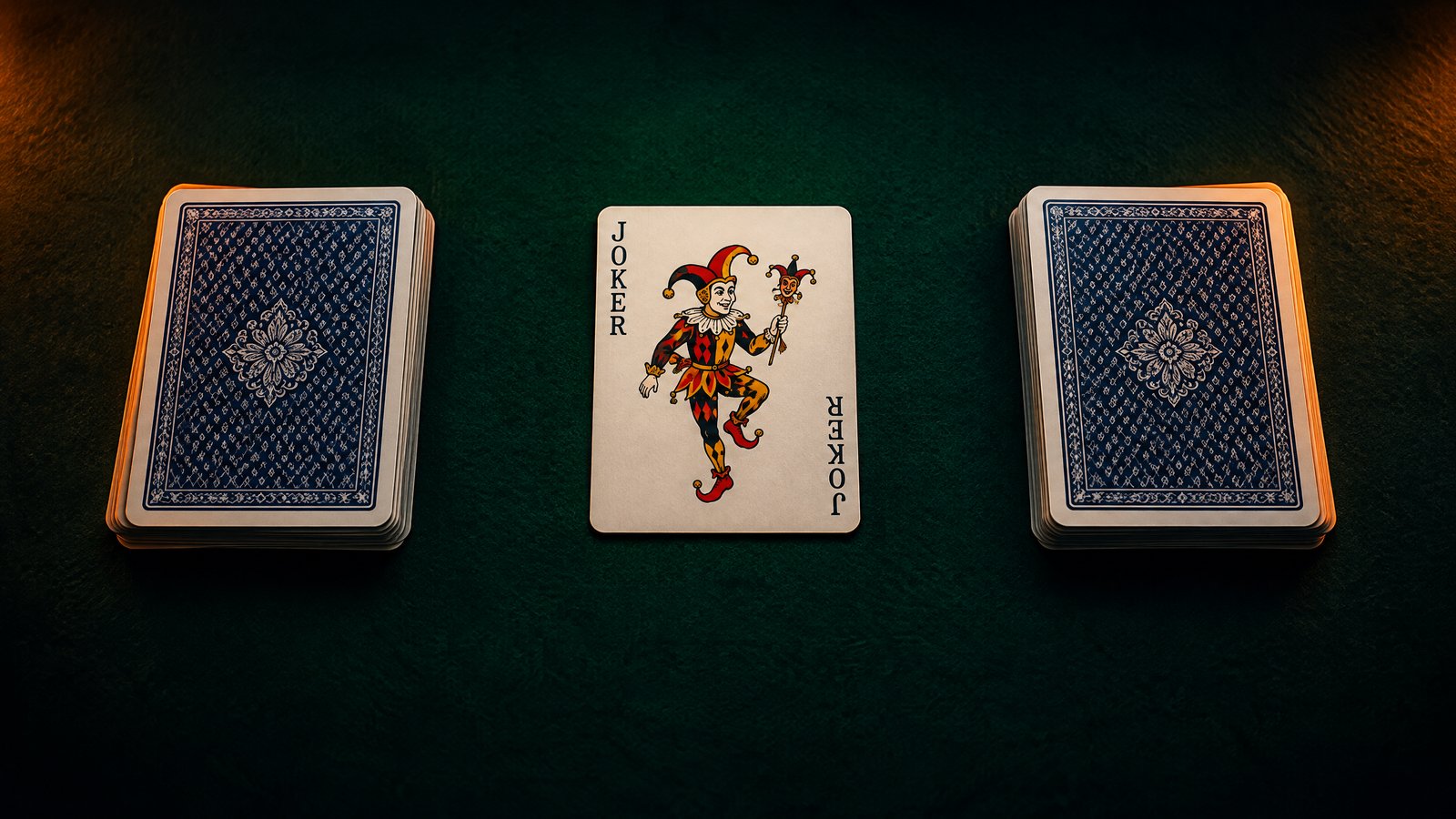
Fairplay Andar Bahar is a factual guide to a traditional Indian comparing-card format. It asks which alternating pile receives the first card matching a face-up middle card. It explains the sequence, terminology, variations, worked example, and distinction from cricket. Rules can differ, so variations are descriptions rather than universal rules.
What Andar Bahar means
“Andar” means inside and “Bahar” means outside. In the usual presentation, a dealer uses a standard 52-card pack, places one card face up as the middle or house card, then deals single cards to two piles until another card has the same rank as that first card. If the matching card lands in the Andar pile, Andar is the result; if it lands in Bahar, Bahar is the result. Suit does not need to match. A seven matches another seven whether the suits are hearts, clubs, diamonds or spades. [1]
The first card is sometimes called a joker or trump card in casual descriptions. Those labels can mislead: it is not a wild card and does not beat other cards. “Middle card” or “house card” is clearer because its rank establishes the target for the deal.
Andar Bahar is a comparison of a random card sequence, not a test of batting skill, player form or match conditions. Understanding the rules does not reveal which pile receives the match. That distinction matters when separating a game-rule explainer from sports analysis.
Standard round sequence
A conventional round can be described in six stages:
- The deck is shuffled and cut according to the table’s procedure.
- One card is exposed face up in the centre. Its rank is the target.
- The dealing order is established. In one common rule, a black middle card starts the deal on Andar and a red middle card starts it on Bahar.
- Cards are dealt face up, one at a time, alternating between the two piles.
- The deal stops as soon as a card matches the middle card’s rank.
- The pile containing that first matching card is recorded as the winning side for the round.
For example, suppose the middle card is the 9 of hearts. Under the colour-based starting convention, the first exposed card goes to Bahar. If the next cards are 4 of clubs, 9 of spades, and 2 of diamonds, the 9 of spades is the first rank match, so Bahar is the result. The 4 and 2 are irrelevant to the match because neither has rank nine.
The colour rule is not universal. Some tables always begin on Andar, then alternate Andar and Bahar. Because the first pile receives one extra early opportunity in many sequences, published descriptions may assign different settlement amounts or probabilities to the two sides. Name the dealing convention before comparing outcomes.
Variations and points of uncertainty
There is no single globally enforced specification for every Andar Bahar table. The following differences are commonly reported:
Starting pile
The first card may be assigned by the middle card’s colour, fixed to Andar, or determined by another house rule. The starting decision changes the labels attached to the first and second positions but does not change the core matching-rank objective.
Extra wagers or checkpoints
Some commercial descriptions mention optional predictions about the number of cards dealt, the middle card’s rank, suit or colour, or an additional decision after two non-matching cards. These are side formats, not requirements of the basic game. Their availability and settlement formula are implementation-specific, so they should not be presented as standard rules.
Deck and dealing procedure
The familiar format uses one 52-card deck, but a table can specify how thoroughly it is shuffled, whether a cut is required, and what happens if an unusual dealing error occurs.
Terminology
“Joker” is widespread but imprecise, while “house card” and “middle card” describe the function more accurately. “Andar” and “Bahar” may also be represented as left and right in a diagram.
A small probability illustration
This labelled hypothetical is not a prediction. Imagine a middle card of 6 and a standard deck in which that card has been removed. There are three remaining sixes among 51 cards. If cards were revealed as one undifferentiated sequence, the first matching six would be equally likely to occupy any of the 51 positions. Andar Bahar does not reveal one undifferentiated sequence: it assigns positions alternately to two piles, and the starting pile receives the first position. Therefore the pile attached to the first position can have a small structural advantage, while the exact result still depends on the random order.
For a simple arithmetic check, if a hypothetical sequence’s first matching six appears at position 7 and the first card was assigned to Andar, odd positions 1, 3, 5 and 7 belong to Andar. The matching card therefore lands on Andar. If the first card instead belonged to Bahar, those same odd positions would belong to Bahar. This is why the starting convention must be recorded before interpreting a result.
Fairplay Andar Bahar FAQ
Is the middle card a joker?
It is often called a joker in informal descriptions, but it is not wild. Its rank is the target that later cards must match. “Middle card” is the least ambiguous term.
Does the matching card need the same suit?
No. The standard objective is a rank match. A 10 of clubs matches a 10 of diamonds, for example.
Which pile receives the first card?
That depends on the ruleset. A common convention uses the middle card’s colour; other versions always start on one named pile. Check the stated dealing order before comparing rounds.
Is Andar Bahar a cricket betting market?
No. It is a card-game format with a matching-rank stopping condition. Cricket markets, where legally available, relate to a sporting event and its playing conditions; they are not part of the card-game rules.
What is the current India legal context?
The Government of India states that the PROG Act and Promotion and Regulation of Online Gaming Rules, 2026 commenced on 1 May 2026 and prohibit online money games, along with their advertising, promotion and facilitation. [4] This page is limited to rules, terminology and sports comparison; it does not make an operator, licence or account claim.