
Fairplay Guide
Fairplay IPL Analysis: Reading a T20 Match Clearly
Fairplay IPL analysis explains T20 phases, run rates, wickets, matchups and official cricket rules with a transparent hypothetical example.
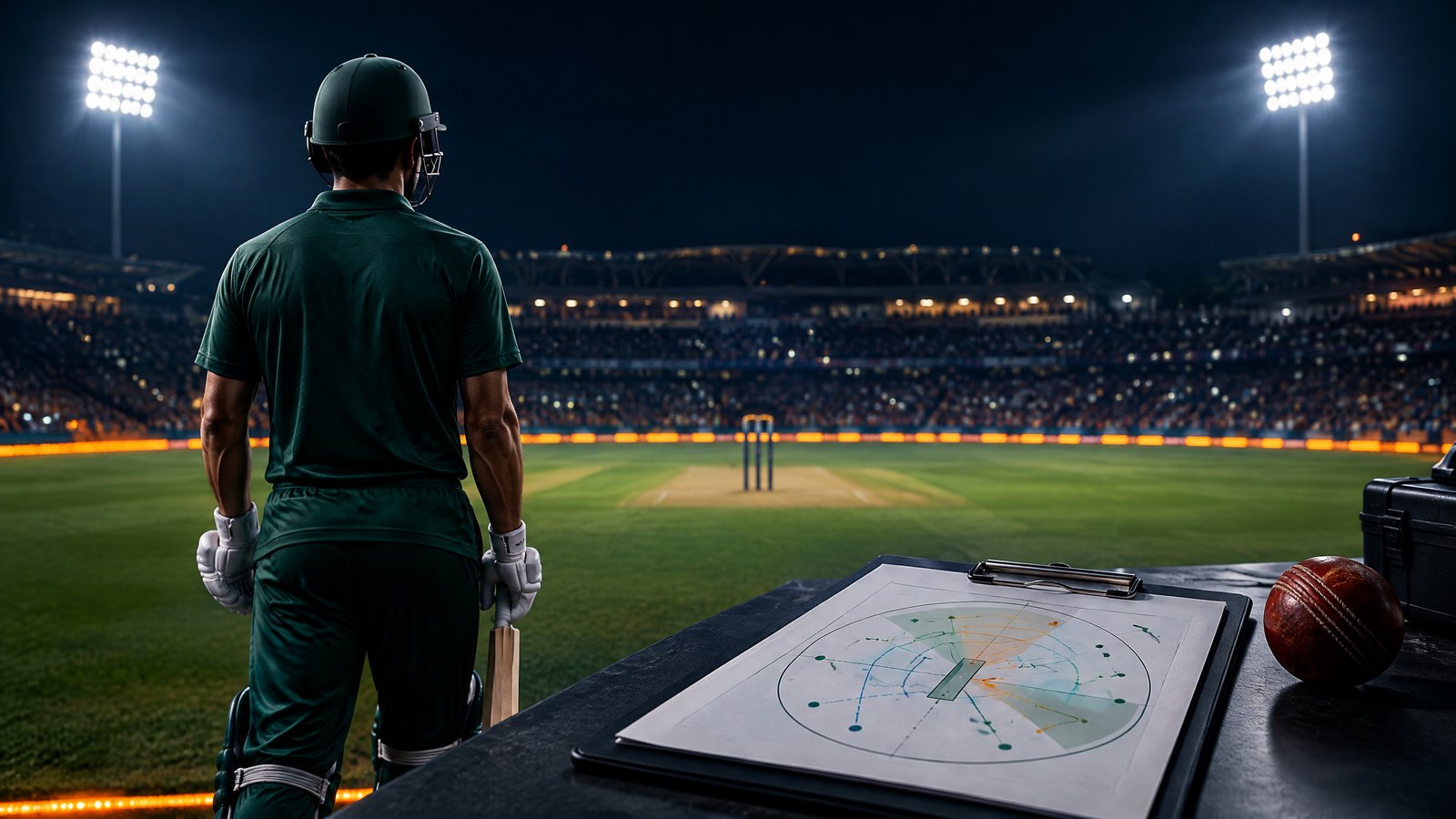
Fairplay IPL analysis is most useful when it separates what the scorecard proves from what a viewer is inferring. The Indian Premier League is a short-form cricket competition, but a short match still contains several different contests: preserving wickets, converting deliveries into runs, controlling the scoring rate, and using bowling resources at the right moments. This guide explains a repeatable, factual way to read an IPL innings without inventing current match statistics or treating a forecast as a result.
What an IPL analysis should measure
An analysis begins with the match conditions, not a headline prediction. Confirm the venue, innings order, scheduled overs, playing XI, replacements, and any interruption before interpreting a number. IPL-specific playing conditions can alter how a competition applies the Laws of Cricket, so the official IPL match playing conditions should take priority for competition details. The ICC playing-conditions library is a useful neutral reference for the relationship between format regulations and match administration.
The main batting questions are:
- How many wickets remain? A side with eight wickets in hand can attack differently from a side with three.
- How quickly are runs arriving? Run rate is runs divided by overs completed, while a required rate is runs still needed divided by overs remaining.
- Where are the boundary runs coming from? Boundaries can reflect power, field placement, missed execution, or a small sample rather than permanent superiority.
- What is the phase pattern? The opening overs, middle overs, and final overs have different field restrictions, bowling options, and risk profiles.
IPL format context and cricket definitions
A standard T20 innings is limited to 20 six-ball overs, subject to the applicable playing conditions and any revised target after an interruption. A legal delivery is one counted in the over; wides and no-balls add to the batting side's score and are not legal balls for that over. The MCC Laws of Cricket are the neutral foundation for concepts such as runs, dismissals, overs, and the roles of umpires. Tournament regulations may add format-specific provisions.
The familiar phases are analytical shorthand, not separate matches. The powerplay normally gives the batting side fielding restrictions early in the innings. The middle overs often reward strike rotation and matchup decisions. The death overs can produce rapid scoring but also create wicket opportunities because batters take greater risks. Exact fielding restrictions, over allowances, substitutions, reviews, and interruption procedures should be checked against the competition's current conditions rather than assumed from an older season.
A run rate is calculated as total runs divided by overs completed. A strike rate is runs multiplied by 100 and divided by balls faced; it describes scoring speed, not batting quality in isolation. A bowling economy is runs conceded divided by overs bowled. These measures are related but not interchangeable: a batter can have a high strike rate in a brief cameo, while a bowler's economy can look strong despite a costly wicket over.
A transparent worked example
The following is a hypothetical innings, not a current IPL score. Suppose a team finishes on 163/5. Its opening phase contributes 42 runs for one wicket: 18 singles (18), four fours (16), one six (6), and two extras (2). The arithmetic is 18 + 16 + 6 + 2 = 42. In the middle phase, the side adds 69 for two wickets: 45 singles (45) and four sixes (24), giving 45 + 24 = 69. The final phase therefore contributes 163 − 42 − 69 = 52 runs, and the innings total is 42 + 69 + 52 = 163.
For a chase, imagine 164 required from 20 overs. At the start, the required rate is 164 ÷ 20 = 8.20 runs per over. If the chasing side reaches 50/1 after six overs, it needs 114 from 14 overs, or 114 ÷ 14 = 8.14. The small reduction suggests the chase is marginally ahead of its starting pace, but it is not a verdict. Wickets in hand, batting depth, pitch behaviour, dew, and the quality of remaining bowlers all affect the next phase. The calculation is exact; the interpretation remains conditional.
Reading matchups without overclaiming
A matchup is a question about interaction, not a guarantee. Compare a batter's scoring zones with a bowler's lengths, handedness, pace, spin type, and likely field. Then test the idea against a meaningful sample and the current conditions. A left-arm spinner may challenge a right-hand batter's preferred sweep, but a batter can change stance, use the crease, or target a different boundary. A fast bowler's historical record at a venue may be informative, yet it cannot settle how a fresh pitch, wind, or team selection will behave.
Fairplay IPL analysis: common mistakes
Mistaking a projection for a result. A scenario can show what would happen if a side scored at a stated rate; it cannot establish that the rate will occur.
Using averages without a denominator. “Good against spin” needs a defined period, balls faced, dismissals, and source. A handful of deliveries is a clue, not a stable conclusion.
Ignoring extras and legal balls. A score built from wides and no-balls has a different bowling story from the same total made entirely from bat runs.
Treating rules as timeless. Playing conditions can be revised; use the current IPL or ICC document for the match being discussed, and MCC for the underlying Laws.
FAQ
Is IPL analysis the same as a prediction?
No. Analysis describes evidence, conditions, and plausible scenarios. A prediction selects an outcome and carries uncertainty. A careful page labels hypothetical arithmetic clearly and does not present it as live data.
What is the difference between a run rate and a required rate?
Run rate describes runs already scored per over completed. Required rate describes runs still needed per over remaining. They answer different questions and should not be substituted for one another.
Why do wickets matter as much as runs?
Wickets remove established batters and reduce the number of safe attacking options. Two innings with the same score can have different outlooks when one side has lost six wickets and the other has lost one.
Which rules source should readers use?
Use the IPL playing conditions for IPL-specific competition provisions, the ICC documents for international playing-condition context, and MCC's Laws for the general laws of cricket. Where they differ, the applicable competition regulation controls the match.
What is the current India legal context for money-linked online play?
The Government of India's Press Information Bureau explainer says the PROG Act and Rules framework commenced on 1 May 2026 and prohibits online money games, including their advertising, promotion, facilitation, and connected payment processing. This page is sports analysis and rules education only; it makes no claim about any operator, licence, or service.
Sources and fact-checking
- [ipl-playing-conditions] Indian Premier League — Match Playing Conditions Checked 2026-10-16
- [icc-playing-conditions] International Cricket Council — Playing Conditions Checked 2026-10-16
- [mcc-laws] Marylebone Cricket Club — The Laws of Cricket Checked 2026-10-16
- [india-prog-context] Press Information Bureau, Government of India — A New Era of Online Gaming Governance Checked 2026-10-16